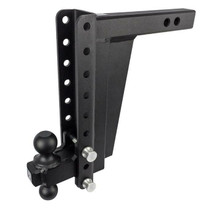
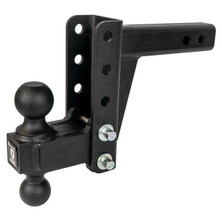
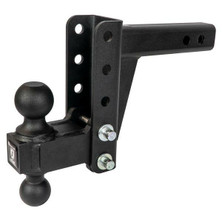
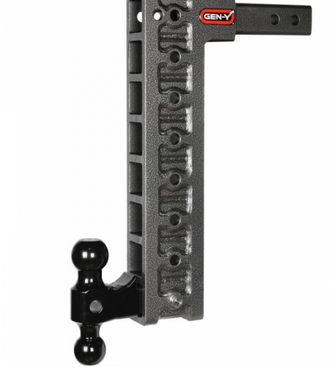
Whether you tow for work or recreation, the hitch must match your receiver opening, trailer setup, and published ratings. Blessed Performance carries adjustable 2-inch receiver hitches in medium-, heavy-, and extreme-duty groups with several drop and rise configurations.
These products are designed for 2-inch receiver openings, but buyers still need to confirm receiver size, hitch-ball requirements, adjustment range, and the ratings for every component in the towing setup. The lowest-rated component controls the usable limit, and a higher-rated hitch does not increase the truck or trailer manufacturer’s limits.
How to Compare 2-Inch Receiver Hitches
If you are shopping for a 2-inch receiver hitch, you should take several steps.
Confirm Receiver Size First
A 2-inch hitch is designed for a 2-inch receiver opening. Many trucks use 2.5-inch or 3-inch receivers, so measure the inside opening or verify the manufacturer’s specification before shopping. If your truck uses a larger receiver, compare 2.5-inch receiver hitches or 3-inch receiver hitches instead.
Compare Ratings
Next, compare the hitch’s published tongue-weight and towing ratings with the ratings for the truck, receiver, hitch ball, coupler, and trailer. Use the lowest rating across the complete setup as the maximum limit, and never exceed the vehicle or trailer manufacturer’s specifications.
Review Construction and Design
Different towing jobs call for different equipment. Compare each hitch’s construction, finish, adjustment range, included components, published ratings, and manufacturer-stated application before ordering.
Choosing the Right Duty Level
Hitches on this page are grouped into medium-, heavy-, and extreme-duty product lines, but those labels are not universal capacity standards. Compare the exact rating, construction, drop or rise range, and intended application listed for each model.
Medium-duty 2-inch hitches can be a practical starting point for lighter towing setups when their published ratings support the complete combination.
Heavy-duty 2-inch hitches offer higher published ratings and additional drop or rise configurations for trucks and trailers that require them.
Extreme-duty 2-inch hitches sit at the upper end of the available product line, but the hitch rating still does not override the limits of the truck, receiver, ball, coupler, or trailer.
Choosing the Correct Drop or Rise
After confirming a 2-inch receiver, determine the drop or rise needed to keep the trailer level on level ground. Available adjustment ranges vary by model, so compare the truck’s receiver height with the trailer coupler height and choose a product whose listed range covers the difference.
Don’t Overlook Hitch Ball Requirements
Many buyers focus on the hitch body but overlook the hitch ball. The ball diameter must match the trailer coupler, and the shank and ball rating must be compatible with the hitch and towing load. Common ball sizes include 1 7/8 inches, 2 inches, and 2 5/16 inches, but verify the trailer coupler before ordering.
Brand Options
Blessed Performance carries BulletProof Hitches for truck owners comparing adjustable drop and rise options across several duty levels. Review each listing for the drop range, published ratings, included components, construction, and finish before ordering.
Buy the Right Hitch the First Time
Use the duty-level sections and product specifications to compare 2-inch receiver hitches by drop or rise, published ratings, and included components. Browse additional towing products when you need related equipment for the rest of the setup.
Contact Blessed Performance if you are unsure which configuration matches your truck, receiver, trailer, and intended use.